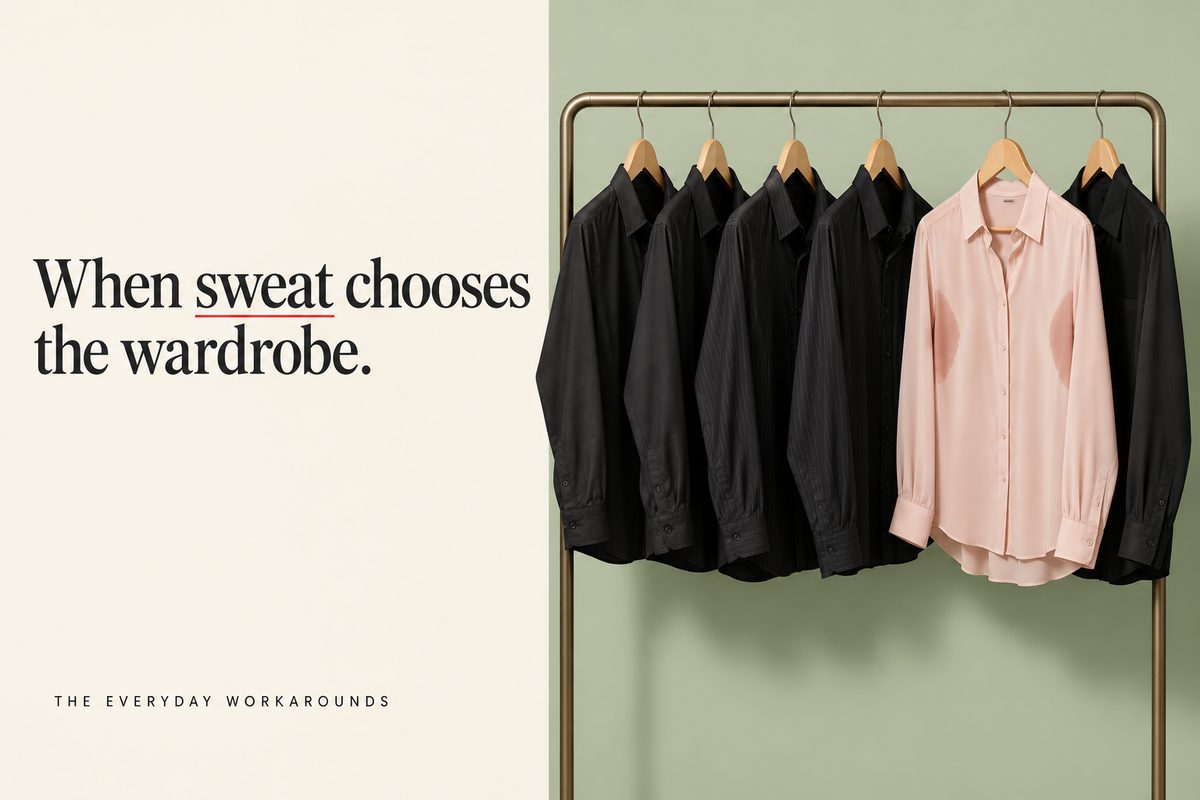
There's a gray shirt in your closet you love.
You haven't worn it in two years.
You know exactly what would happen by 10 a.m. So you reach for black. Again. Friends think black is just your style. It isn't. It's survival.
You skip the silk blouse, the light blue button-down, the pastel anything. You keep your arms down in meetings. You check the mirror before reaching for anything on a high shelf. You replace shirts every few months because the yellow stains never come out.
It's one small decision every morning. Until you realize sweat has been getting you dressed for years.
Here are 7 reasons it keeps happening, and the herb Europeans have used for it for generations.
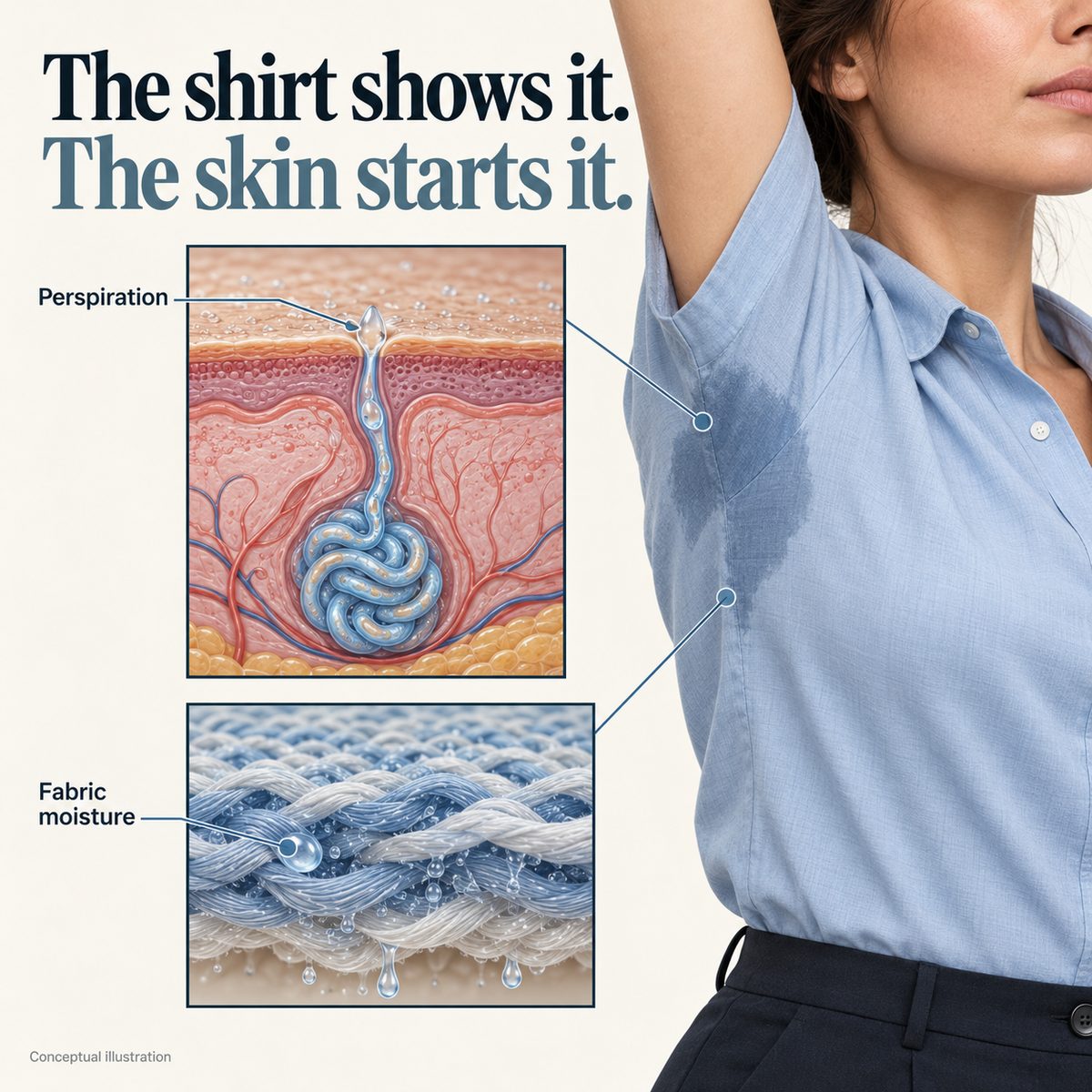
1. Your shirt isn't the problem. Your skin is where it starts.
A pale shirt shows a wet patch. A black one hides it. Either way, the sweat comes from the same place: the glands underneath your skin.
Changing fabric changes what people see. It doesn't change how much you sweat.
That's why a closet full of black tops feels like a solution and still leaves you checking your arms all day.
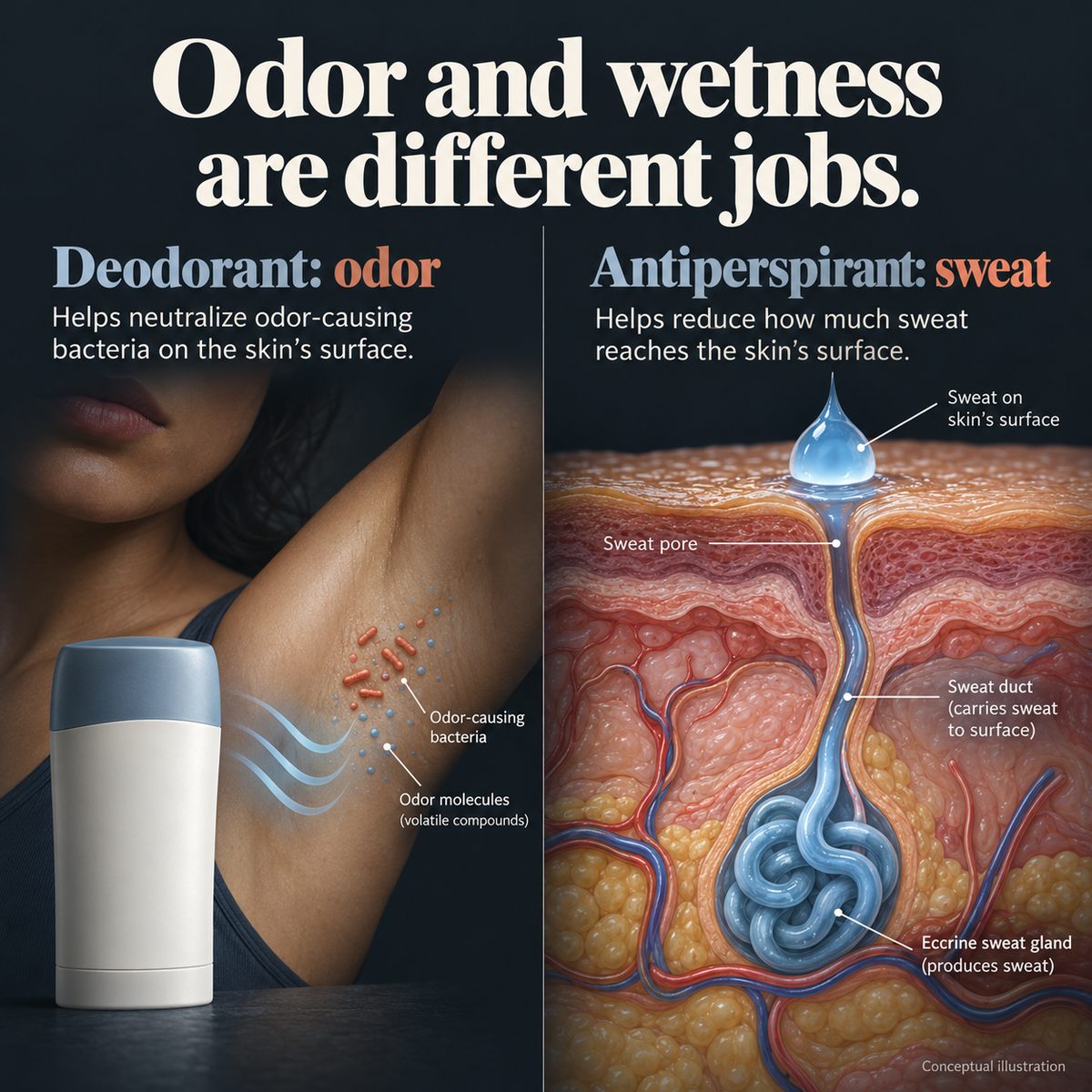
2. Your deodorant was never designed to keep you dry.
Deodorant fights odor. It does nothing about wetness.3 Antiperspirant is the one that goes after sweat, by temporarily plugging the surface of your sweat ducts.
If you've been buying “48-hour protection” and still soaking through, flip the stick over and check the label.
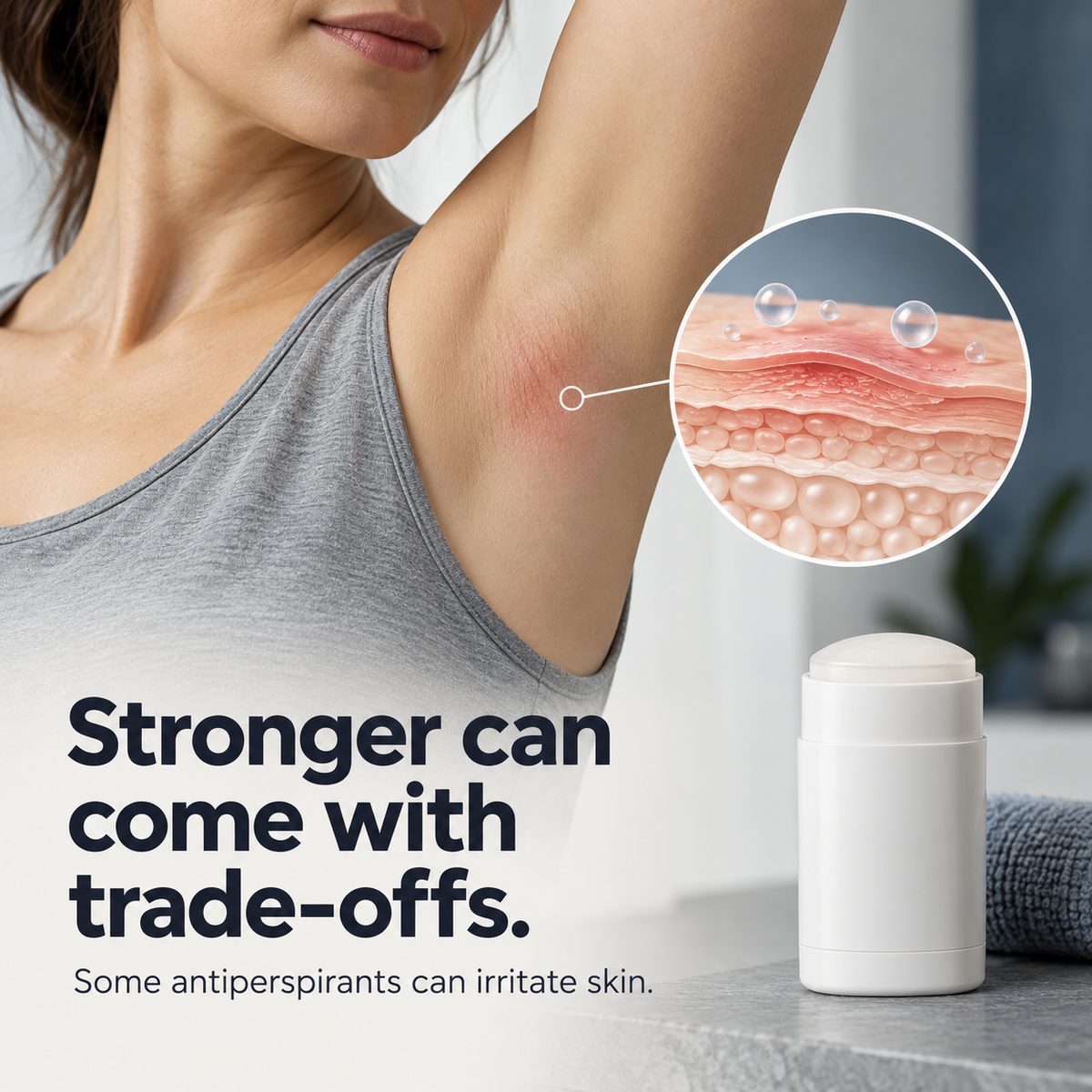
3. The stronger stuff can burn.
So you go clinical strength. Then prescription strength. You put it on at night, the way the label says.
And you wake up itching. Stinging. A red rash in your armpit that makes shaving miserable. Strong antiperspirants can irritate the skin, and for some people the irritation is the reason they stop.7
For a lot of people it still wears off by mid-afternoon. Then the sweat finds its way through again.

4. It happens in a cold room because it isn't about heat.
The AC is blasting. Everyone else has a sweater on. And you're quietly deciding whether it's safe to take your blazer off.
That's because this kind of sweating isn't about temperature. Your sweat glands are switched on by signals from your nervous system, and for some people those signals fire far more than the body needs to stay cool.1
Stress turns it up even more. The presentation. The tense phone call. The moment you start worrying it's showing, which makes you sweat more, which makes you worry more.
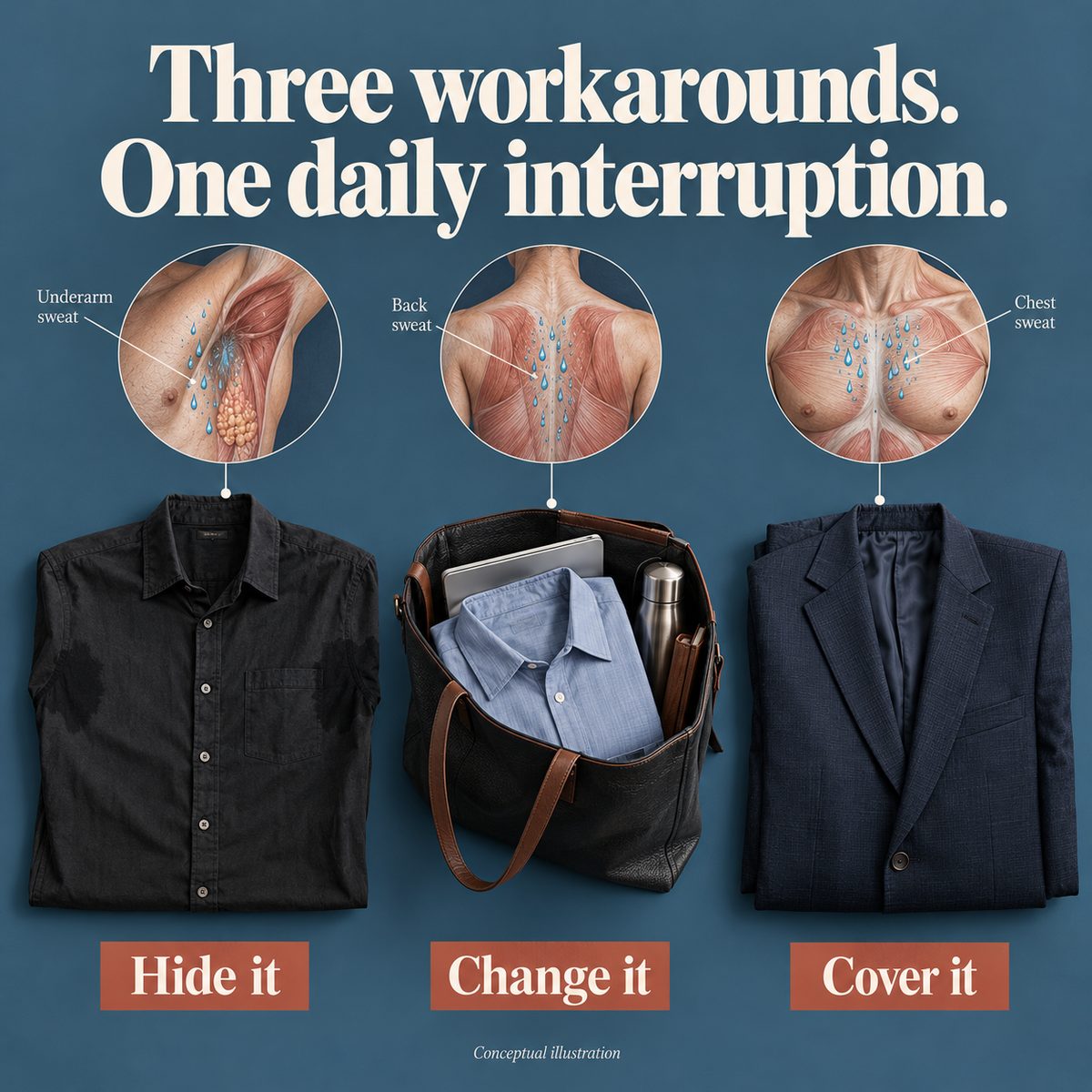
5. You've built a whole system around it.
Hide it: dark colors, patterns, layers.
Change it: the spare shirt in your bag, the bathroom swap at lunch.
Cover it: the jacket you keep on in July.
Each one gets you through the next hour. Together, they take up a surprising amount of your day, your closet and your head. And none of them touch why it's happening.
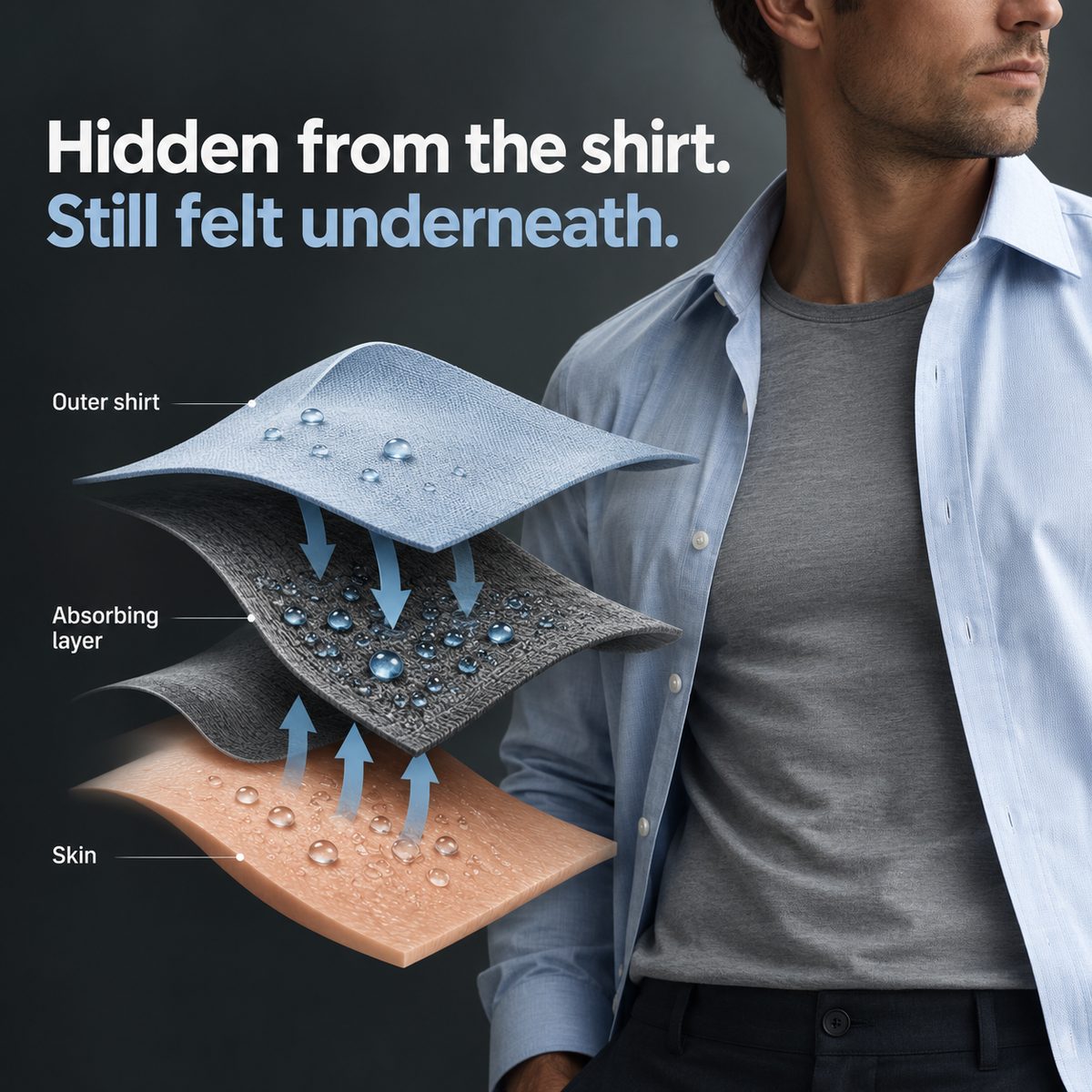
6. Sweat-proof undershirts hide it. They don't stop it.
An undershirt with a padded pit can save a light-colored shirt. That's a real job.
But it's one more layer in July, at about $30 a shirt. It soaks up the sweat before it reaches the outside, which means you're wearing a small damp towel underneath. You look dry. You don't feel dry.
Hiding sweat and sweating less are two different things. Almost every product on the shelf only does the first.

7. Europe has had a daily answer for generations. It's sage.
The same gray-green herb from your spice rack has a long history in European herbal medicine for excess sweating. The European Medicines Agency's official herbal monograph lists sage leaf for the relief of excessive sweating, based on long-standing traditional use.2
In Germany, sage tablets made specifically for excess sweating are sold in pharmacies, no prescription needed. Here, almost nobody has heard of them.
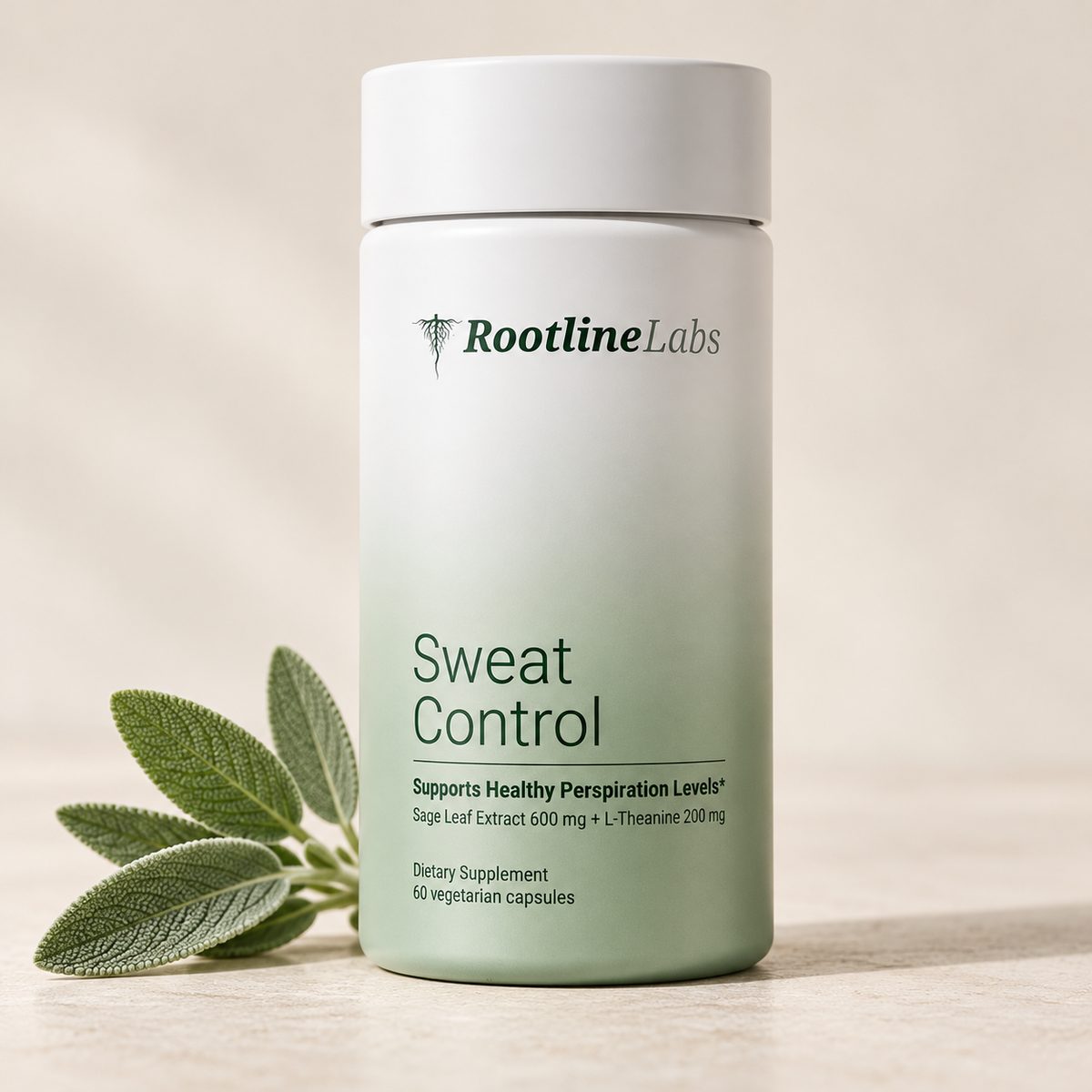
Rootline Labs Sweat Control brings that tradition here, made the careful way: 600 mg sage leaf extract (standardized to 2.5% rosmarinic acid, low thujone, tested every batch) plus 200 mg L-theanine to support a calm response under pressure.8*
Two capsules with breakfast. Nothing to apply to your underarms. It's taken by mouth, so it fits around whatever else you already do.